Jack the Ripper
Awakening the Angel System: Apocalypse: A LitRPG Progression Fantasy“Jack the Ripper” is both a sensational public label and the darkest name attached to Jack’s transformation. It first appears among hostile headlines, then becomes a battlefield cry hurled by terrified enemies, and finally describes the moral condition of a ruler whose devotion to family and humanity has become indistinguishable from mass destruction. The expression’s force lies in that progression: it does not merely identify a killer, but records how Jack’s legend consumes the person he once was.
From Headline to Myth
Jack encounters the name while reading tabloids documenting the day’s adventures. Among claims that he is an heir, a hero, a sellout, or the lover of a queen, one headline asks whether he is “Jack The Ripper?” The newspapers are usually filled with speculation and blatant falsehoods, but their treatment of Queen Selfia is more directly insulting and may constitute treason. In this setting, “Jack the Ripper” begins as sensational journalism: a lurid phrase competing with incompatible versions of Jack’s identity.
The headline nevertheless foreshadows a public mythology that ordinary rumor cannot contain. It places Jack beside the image of an infamous murderer while the surrounding headlines attempt to turn his political position and private life into spectacle. The name therefore functions as an accusation before it becomes a reputation. It converts the violence of a particular campaign into a portable identity, one that can be repeated by strangers who know Jack chiefly through stories of bloodshed.
The Name Spoken by the Enemy
By the time Jack confronts Papal Paladins, the expression has passed from print into oral legend. After days of fighting and constant carnage, Jack has acquired a mythos powerful enough that the kneeling paladins recognize him as “The Ripper man.” They prostrate themselves and beg forgiveness before the figure they regard as an angel of death. The variant does not soften the title; its broken delivery reveals fear, while its use by an enemy confirms that Jack’s reputation has become an immediate battlefield fact.
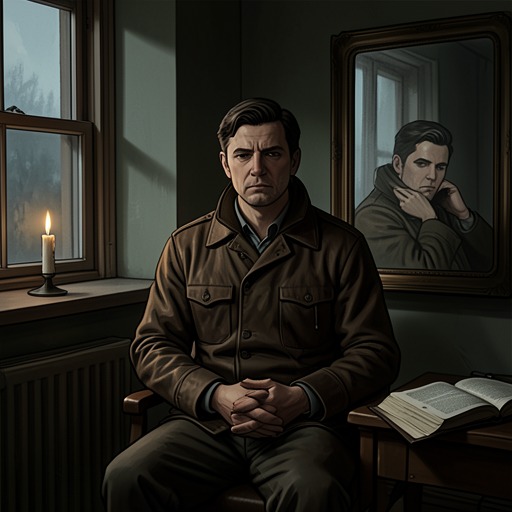
The scene makes the name more than propaganda. Jack steps over the drained corpses of Nest agents and stands before the praying paladins, but their submission no longer moves him. The violence has scarred his heart, and his eyes carry what the narration describes as an erosion of the soul. Although he remains King of the Imperium, the youth who once dreamed of the open sky has disappeared from his expression. “The Ripper man” thus marks a social transformation: enemies no longer encounter an individual soldier or sovereign first, but the accumulated terror of his actions.
Violence and the Language of Necessity
The expression belongs to a wider struggle over how violence should be named. Selfia insists that she has sacrificed her arms, morals, heart, and possibility of love for the continuity of mankind, declaring herself willing to kill children, level cities, and sacrifice thousands if doing so saves millions. Her reasoning gives mass violence the vocabulary of duty and survival. Jack’s later identity as the Ripper exposes the same logic from another angle: protection can become a justification for acts that destroy the very moral world being defended.
That conflict is sharpened by Jack’s discovery of the bishop’s facility. Behind winding tunnels he finds cages containing children used as test subjects, some starving, decomposing, or already dead. The bishop presents the children he has taken in, fed, and clothed as proof of love and care; Jack answers that the system is sickness. The Ripper’s violence is therefore not detached from the suffering he witnesses. It emerges amid competing claims that cruelty is benevolence, experimentation is purpose, or slaughter is necessary. The name gathers these contradictions into a single figure: a man who condemns institutional abuse while becoming capable of annihilating those he identifies as threats.
The Ripper as Catastrophic Action
The most devastating use of the identity occurs when Jack refuses to stop until his family is safe and declares that protecting them includes tying up every loose end. He speaks a single command—“Fira.”—and releases a dense beam of black energy from his palm. The attack cuts a straight path through the city and stops only at the distant tower. A miniature sun then forms around it, swallowing Cordell Plaza, the demonspawn, and the survivors, who are instantly atomized.
Here the expression ceases to be a question printed by tabloids or a cry spoken by frightened soldiers. It becomes an action whose scale makes the title literal in cultural rather than merely personal terms. Jack’s stated objective is familial safety, yet the method erases an entire urban space and everyone within the blast’s reach. The catastrophe reveals the fatal elasticity of his protective principle: once every possible threat is treated as an unfinished danger, “family” can be defended through the destruction of strangers, cities, and witnesses.
Final Contrast with Michael
The name also frames Jack’s confrontation with Michael. Michael calls him a monster and defends his own twenty-thousand-year campaign as the solitary effort of someone determined to save humanity from an endless cycle of warfare. He claims that comrades became memories and that he would repeat everything if it meant preserving humanity. Jack rejects the appeal to necessity, asking whether all the pain and suffering—including his own—were supposedly required for a greater good.
The exchange establishes a grim symmetry. Michael presents himself as the architect of salvation through immense historical violence; Jack, already marked as the Ripper, answers him through physical punishment rather than accepting the argument. Jack kicks Michael down and breaks his jaw when Michael tries to rise. The title therefore does not simply separate hero from villain. It places Jack inside the same moral field as the enemy he condemns, while the difference between them remains contested through the purposes, victims, and consequences of their violence.
Meaning of the Expression
“Jack the Ripper” records Jack’s descent from public heroism into feared legend and ethical uncertainty. Its recurrence traces three stages: rumor manufactures the name, enemies authenticate it, and Jack’s own catastrophic choices fulfill its implication. The expression preserves the contrast between the young dreamer remembered by the narration and the hardened king whose eyes show no trace of that earlier self.
At the same time, the name is not a complete definition of Jack. It is an imposed myth, a battlefield shorthand, and a judgment produced by violence. The book uses it to ask whether a person who kills for protection can remain morally distinct from those who kill for domination, and whether appeals to humanity can survive methods that annihilate human lives. “Jack the Ripper” is consequently less a stable alias than a warning: every act performed in the name of safety can also deepen the identity it was meant to resist.